USING TARGET LAYOUT TO IMPROVE DECISION-MAKING
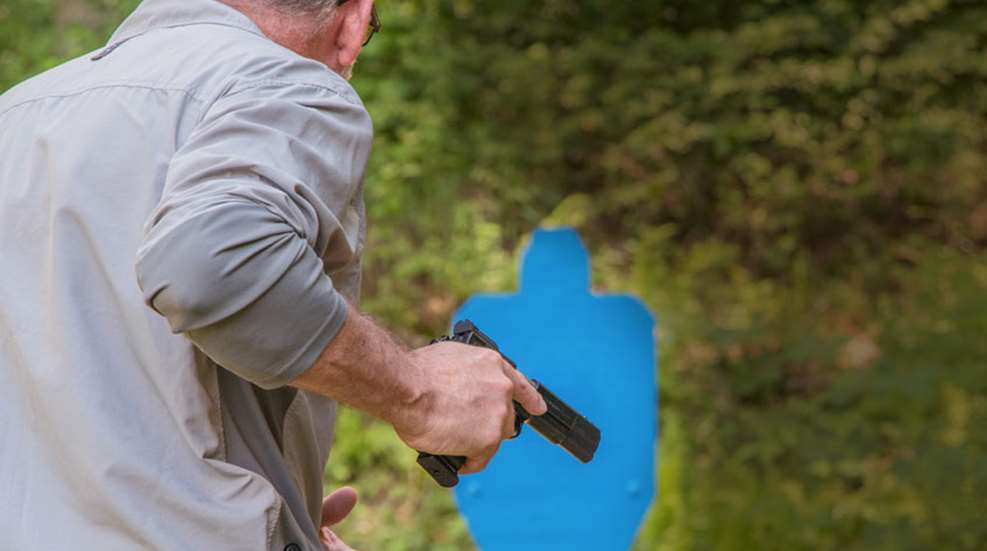
Shooting does not simply mean quickly pulling the trigger. Once the clock begins or the stress sets in, the difference between good and great shooters is their ability to think during movement and shooting. This is why smart target layout is important.
To develop decision-making skills during your range time, you have to consider not only what your targets are but how you set them. Tactical shooting targets are an effective tool, and only when you make them purposeful.
So here is how you can prepare your drills to train your brain, not only your hands.
Use distance variation to control tempo
Your pace remains flat when all your targets are at an equal distance. Actual shooting, whether in competition or defense, is not like that. Therefore, pace your goals. Put one near, one medium range, and one further away.
- The nearer target is there to tempt you to be quick
- The medium-distance one must slow you a little
- The far one makes you firm up your fundamentals.
Such an arrangement instructs throttle management, a skill that is as important as outright speed. You are conditioning your mind to be able to change speeds without losing it.
Take advantage of angles and movement areas
Do not place your tactical shooting targets in a straight row. Place them around barriers, close to corners, or along a direction of movement. It is intended to make you decide:
- What target to attack first
- At what point to reload?
- Whether to move prior to or after a shot.
Your drill is now a mini-stage, not only a shooting test. You are training yourself to learn how to prioritize when under pressure, the same as it would be in an actual match or real-life situation.
Combine threats and no-shoots
You shoot what you see, but what if you are forced to make a split-second decision?
So, throw in no-shoot overlays, hostage targets, or partials. This way, you are no longer merely reacting. You are processing. It is that pause, however brief, which you wish to train.
You will develop the habit of visual confirmation instead of operating on the assumption that every silhouette is a target. Do not remind yourself beforehand about the threat targets. Approach the line cold. This way, you are training recognition under pressure, not memorization.
Add sequencing pressure
Assign yourself an order of operations, such as near to far or only hit the leftmost target first. Then vary it the following run. This makes you think during the run, not only depending on muscle memory.
You will find yourself hesitating, second-guessing, and possibly even dropping a reload. That is the point. It is at these stress points that the most learning occurs.
Summing up
When you put tactical shooting targets down in a planned manner, you get more than reps. You get reps that have a purpose. You are no longer shooting drills. You are developing the capacity to think on your feet, shoot straight, and improvise under tension. That sort of decision-making will be the difference whether in a match or in something bigger.