
Blackjack Variants That Challenge Traditional Strategy
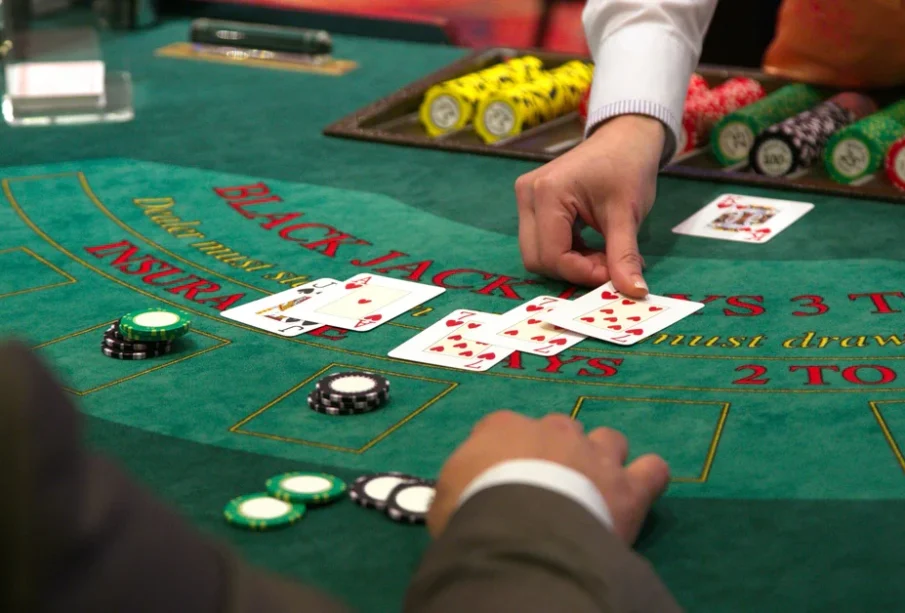
For decades, traditional blackjack has stood as one of the few casino games where player decision-making directly alters the house edge. Grounded in probability and mathematics, basic strategy charts provide players with mathematically optimal moves for every possible hand combination against any dealer upcard. Following these guidelines reduces the house edge to roughly half a percent under standard rules.
However, game developers and casinos have introduced numerous blackjack variants that alter fundamental rules, payout structures, and deck compositions. These modifications break standard basic strategy logic, forcing players to unlearn familiar habits and rethink how they handle basic decisions like standing, hitting, doubling down, and splitting pairs.
Why Traditional Strategy Fails in Non-Standard Games
Classic basic strategy assumes fixed foundational rules: a natural blackjack pays 3 to 2, the dealer stands or hits on soft 17, players can double down on any two cards, and a tie results in a push. When a variant alters one or more of these core pillars, the entire mathematical framework shifts.
A rule change as subtle as allowing a dealer win on ties or removing specific cards from the deck completely reshapes optimal play. Applying standard strategy charts to these specialized variants inflates the house edge significantly. To stay competitive, players must understand the mechanics of each variant and adjust their strategic approach accordingly.
Notable Blackjack Variants and Their Strategic Shifts
Several popular blackjack variants drastically modify core mechanics, requiring players to discard standard strategy charts in favor of specialized decision-making.
Blackjack Switch
Invented by Geoff Hall, Blackjack Switch is one of the most popular alternatives to standard blackjack. In this variant, players are dealt two separate hands simultaneously and are allowed to switch the second card dealt to each hand before making playing decisions.
-
Rule Modifications: Players must play two equal-sized bets per round. To offset the massive player advantage gained by switching cards, a natural blackjack pays even money (1 to 1) instead of 3 to 2. Furthermore, a dealer total of 22 is not a bust; it pushes against all non-busted player hands, except for a natural blackjack.
-
Strategic Impact: The ability to switch cards completely reshapes pre-draw choices. Players often trade a weak hand and a strong hand to create one powerful total, or switch to create optimal double-down opportunities. Because a dealer 22 counts as a push, players must adopt a far more aggressive hitting strategy on hard totals to build stronger hands, as a soft 17 or hard 18 carries less defensive value than in standard games.
Double Exposure Blackjack
Double Exposure Blackjack eliminates the element of hidden dealer information by dealing both dealer cards face up from the start.
-
Rule Modifications: Seeing both dealer cards gives the player an immense informational advantage. To balance the mathematical scales, ties automatically go to the dealer (except on natural blackjacks), natural blackjacks pay even money, and players are typically restricted in their ability to double or split.
-
Strategic Impact: Because dealer information is fully exposed, player strategy shifts radically. In standard blackjack, players often stand on hard 12 through 16 when the dealer shows a weak upcard like a 4, 5, or 6, expecting the dealer to bust. In Double Exposure, if the dealer shows a hard 17 or higher, the player knows with 100 percent certainty that standing on a 15 results in an immediate loss. Consequently, players must hit hard totals like 15 or 16 against a dealer’s hard 17, accepting a high probability of busting because sitting still guarantees a loss.
Spanish 21
Spanish 21 is a fast-paced variant played with a custom deck. The game removes all four 10-point rank cards from every deck, leaving a 48-card shoe consisting of 2s through 9s, Jacks, Queens, Kings, and Aces.
-
Rule Modifications: Removing the 10-spot cards gives the dealer a distinct mathematical edge. To compensate, the game grants liberal player rules: player blackjacks always win (beating dealer blackjacks), a player total of 21 always wins, doubling down after splitting is allowed, surrender is permitted at any point, and bonus payouts exist for specific multi-card 21 combinations (such as 6-7-8 or 7-7-7).
-
Strategic Impact: The removal of 10s fundamentally changes deck density, lowering the probability of busting when drawing to a stiff hand. Standard strategy rules regarding when to hit or stand do not apply. In Spanish 21, drawing to multi-card hands becomes far safer, and players hit much more aggressively on soft totals. The presence of specialized bonus payouts also makes certain hits mathematically optimal that would be completely incorrect in a standard game.
Super Fun 21
Super Fun 21 uses a single standard 52-card deck and preserves most traditional blackjack rules, but introduces a wide array of favorable player payouts and rules.
-
Rule Modifications: A player natural blackjack pays even money, except when composed of diamonds, which pays 2 to 1. Players can double down on any number of cards, surrender after doubling down (known as double down rescue), and automatically win if their hand reaches 6 cards totaling 20 or less, regardless of the dealer hand.
-
Strategic Impact: The option to double down on three or more cards, along with the double down rescue feature, heavily alters optimal play. Players can double down on weak, multi-card hands that would be standard hits in traditional games. Additionally, chasing multi-card automatic wins alters standard standing rules when holding five-card hands with low totals.
Pontoon
Pontoon is a popular British variant with ties to standard blackjack, but it features distinct terminology and mechanics that alter table strategy.
-
Rule Modifications: Both dealer cards are dealt face down. A two-card total of 21 is called a Pontoon and pays 2 to 1. The second-best hand is a Five-Card Trick (any five-card hand that has not busted), which also pays 2 to 1 and beats any non-Pontoon total. Additionally, players must hit on any total of 14 or less, and all ties are won by the dealer.
-
Strategic Impact: The mandatory hit rule on totals of 14 or less eliminates player discretion on stiff hands. Furthermore, the high payout for a Five-Card Trick encourages players to take hits on small multi-card totals that they would ordinarily stand on in standard blackjack. The complete absence of visible dealer upcards forces players to play strictly against the probabilities of their own hand structure.
Structural Comparison of Key Blackjack Variants
Evaluating key rules across variants helps highlight how rule changes drive strategic deviations from traditional blackjack.
Strategic Principles for Adapting to Non-Standard Games
Transitioning from standard blackjack to complex variants requires a disciplined approach to bankroll management and strategy development.
-
Never rely on traditional basic strategy memory: Applying standard strategy to games like Spanish 21 or Double Exposure increases the house edge dramatically. Always obtain or generate a game-specific strategy matrix.
-
Evaluate the true cost of rule trades: Rule changes that appear favorable to the player are always balanced by restrictive rules elsewhere. A game offering face-up dealer cards typically claws back that edge through even-money payouts or dealer-wins-on-ties rules.
-
Account for deck composition changes: Games that remove specific ranks alter the likelihood of drawing 10-value cards. Lower 10-density means players bust less often when hitting stiff totals, shifting decision thresholds across the board.
-
Factor in specialized bonus payouts: When games offer 2-to-1 or 3-to-1 payouts for specific card sequences, chasing those combinations slightly alters the baseline decision tree, making hits optimal where stands would otherwise apply.
Future Outlook for Blackjack Innovation
Casinos and software developers continue to test new blackjack variants, driven by player demand for faster gameplay, side bets, and novel mechanics. As technology enables more complex rule tracking and dynamic payout structures, upcoming variants will likely continue pushing the boundaries of traditional card strategy. For players, mastering these modified environments requires looking past habit and adapting to the unique mathematical reality of every variant.
Frequently Asked Questions
Why does a dealer pushing on 22 significantly impact basic strategy in Blackjack Switch?
A dealer pushing on 22 neutralizes many hands that would otherwise win when the dealer busts. Because the dealer busts far less frequently, defensive standing on hard totals like 12, 13, or 14 yields lower expected value. Players must hit more aggressively to build totals of 19, 20, or 21 to consistently beat the house.
Is the house edge higher or lower in Spanish 21 compared to standard blackjack?
When played with optimal, game-specific strategy, Spanish 21 can offer a house edge comparable to, or even lower than, typical standard blackjack games. However, if a player mistakenly uses standard blackjack basic strategy in Spanish 21, the house edge increases significantly due to the missing 10-spot cards.
Why do ties going to the dealer in Double Exposure Blackjack change standing decisions?
In standard blackjack, a tie results in a push where the player retains their bet. In Double Exposure, ties lose to the dealer. If the dealer shows a hard 18 and the player holds a hard 15, standing guarantees a loss. The player is forced to hit, despite the risk of busting, because hitting is the only action that offers a mathematical chance of winning.
How does removing 10-spot cards in Spanish 21 affect doubling down?
Because 10-point cards make up a smaller percentage of the deck, the likelihood of receiving a 10 on a double-down attempt is lower than in standard blackjack. However, liberal doubling rules, such as doubling down on any number of cards and doubling after splits, balance this shift and allow players to double down in unique multi-card situations.
Are side bets in blackjack variants mathematically worth playing?
Most side bets carried by traditional blackjack and its variants carry a significantly higher house edge than the main game, often ranging from 3 percent to over 10 percent. While side bets offer high payout multipliers, they are mathematically unfavorable over long playing sessions compared to executing proper base-game strategy.
What is a Five-Card Trick in Pontoon, and how does it affect play?
A Five-Card Trick occurs when a player successfully draws a five-card hand without exceeding a total of 21. In Pontoon, this hand automatically pays 2 to 1 and ranks second only to a natural Pontoon. This high payout makes drawing additional cards on small multi-card totals highly attractive, altering traditional stand thresholds.


